

Increasing inbound leads through UX-informed A/B testing on Aflac paid media landing pages, using HotJar and GA4 to surface insights and validate design decisions.
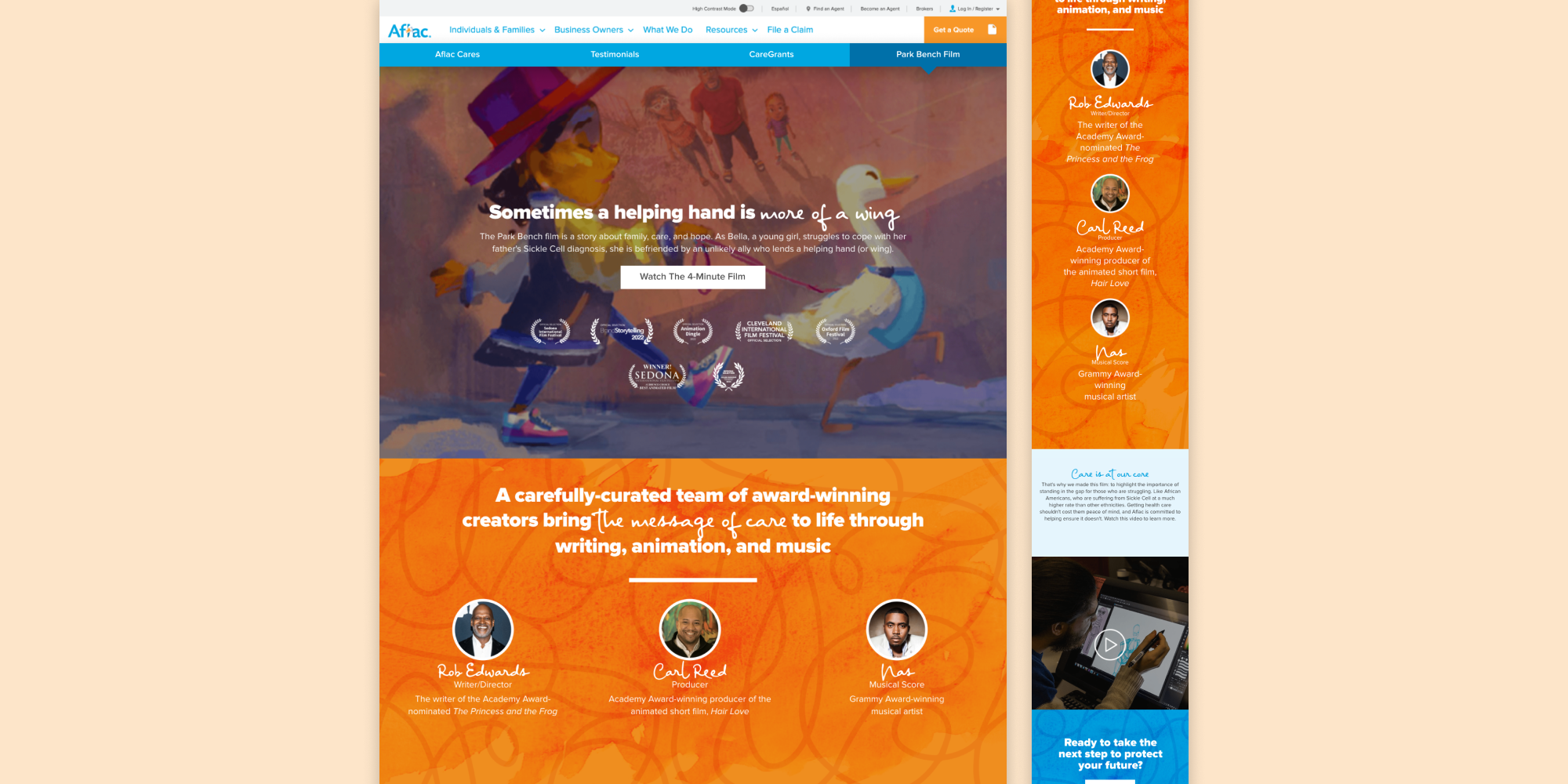
As a creative and UX designer at our agency, I work on an ongoing engagement with Aflac to improve conversion across their paid media landing pages. The work sits at the intersection of research and design, using behavioral data to inform targeted tests that move the needle on lead generation and average profit(AP) per session.
Optimizing for conversion without direct access to users meant building a case for every design decision through data alone, while staying within the boundaries of an established brand.

We combine behavioral research and creative design to propose, build, and validate tests that make Aflac's paid media pages work harder for both the user and the business.
Our process is grounded in behavioral analysis. We use HotJar heatmaps and clickmaps to understand how users are interacting with pages, then cross-reference those findings with GA4 funnel data to identify where drop-off is happening and why. From there, I translate those insights into design hypotheses and build out variations for A/B testing, ensuring every proposed change is tied to a specific, measurable rationale.
On the design side, I work within Aflac's brand guidelines to create test variations that feel native to the existing experience while introducing meaningful improvements. One test I led explored how copy changes could address the tension between call center volume and lead quality. Updating the primary CTA from "Call Us" to "Call for Quote" clarified user intent at the point of action, resulting in a CVR to leads ratio of 38% in the variation compared to 20% in the control, at 100% significance, with a higher estimated AP per session for the variation as well.
Creative tests have also shown strong results. Replacing a stock photo with an on-brand duck hero image on the Cancer Product page drove a CVR increase of +29% at 96% significance, reinforcing that brand-aligned creative decisions can have a measurable impact on performance.


"Many participants required prompting from moderator to look below the fold on landing page and beyond. After this, they began exploring pages more thoroughly."

Stakeholder
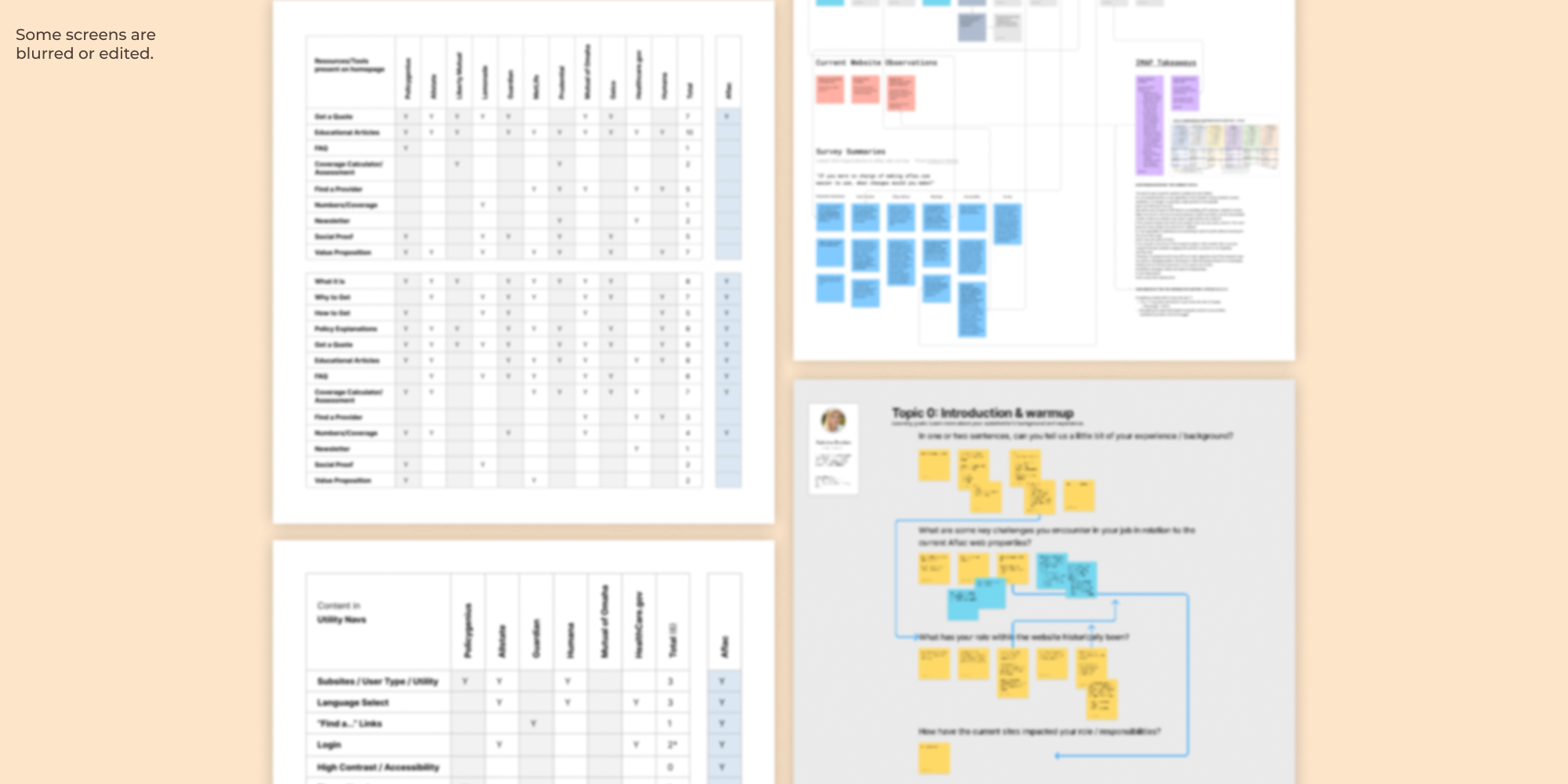
This is an ongoing engagement, with each test cycle building a stronger evidence base for what moves Aflac's users toward conversion. The results to date, including significant lifts in CVR and AP per session across multiple test types, demonstrate the value of pairing rigorous behavioral research with intentional creative design.
Takeaways